Pearl People: The Young British Jewellers Making Heirlooms for a Resale Generation
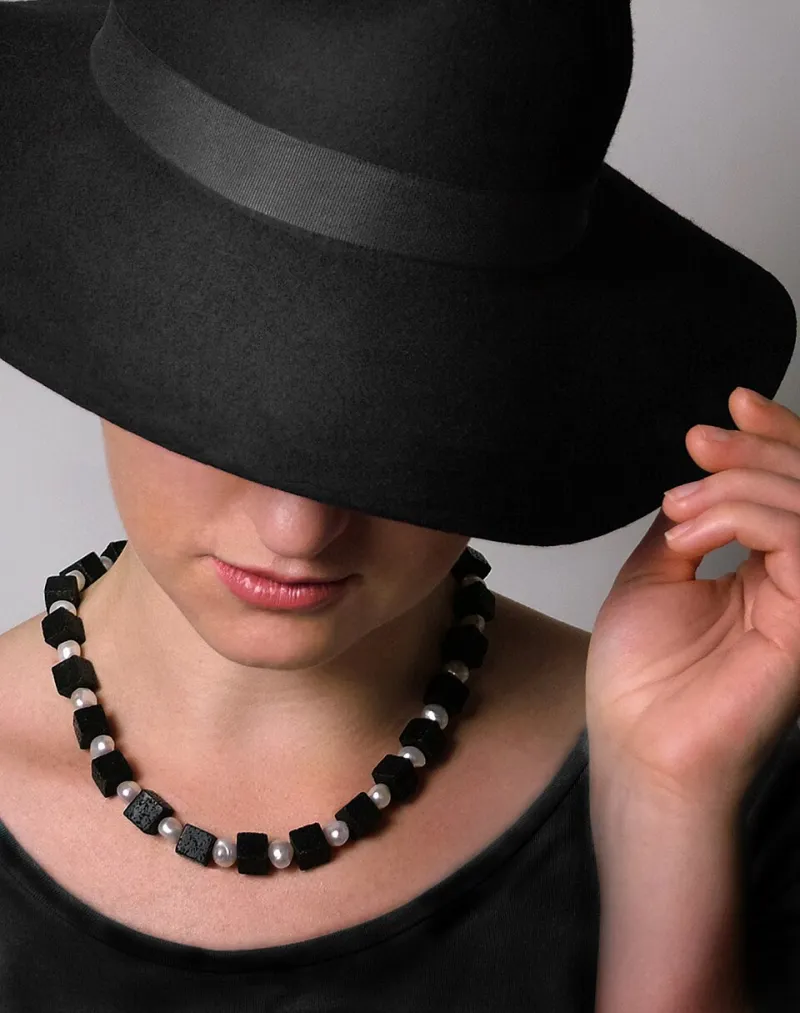
Photo: W.carter, CC BY-SA 4.0, via Wikimedia Commons
Pearls have a PR problem. For decades they arrived in a velvet box, usually from an aunt, usually with a clasp that needed fixing. They were occasion jewellery: weddings, christenings, the good blouse. But something has shifted. Scroll through the independent jewellery corners of Instagram or stand at a weekend market in Glasgow, Bristol or Peckham and you will find pearls in altogether stranger, sexier settings — lumpy baroque drops on recycled silver hoops, a single misshapen pearl slid onto a chunky chain, a cuff that looks like it was dug up rather than handed down.
The people making these pieces are mostly in their late twenties and thirties. They are not trying to recreate grandma’s necklace. They are making heirlooms for a generation that buys second-hand on Vinted, repairs its trainers and thinks carefully about what “new” actually means. The result is a small but growing corner of British jewellery that feels modern, affordable-ish and genuinely personal.
The baroque turn
“I wanted pearls that looked like they had a history, even if they were brand new,” says Mara Quinn, 31, founder of Quinness, a Glasgow-based label she runs from a shared studio near the Clyde. “Round pearls are lovely, but they can feel a bit corporate. Baroque freshwater pearls have character. No two are the same, which means the customer is not buying a uniform product. They are buying a small oddity.”
Quinn uses cultured freshwater pearls from a supplier she visits in Zhejiang, China, and recycled 925 silver from a UK refiner. Her pieces start at £58 for a single pearl stud and top out around £320 for a layered necklace. She sells mostly direct through her website and at occasional Scottish craft fairs, which keeps overheads low and prices honest. “I want people to know what they are paying for,” she says. “The pearl, the silver, the hours. Not a markup for a department store concession.”
That transparency matters to the resale generation. They are used to checking provenance before they buy a coat; they want the same from jewellery. Quinn now includes a small card with every order explaining where the pearls are cultured, how to clean them and what to do if a clasp fails. “It is not glamorous information,” she says. “But it turns a purchase into a relationship.”
Makers, prices and provenance
In London, Iris Adeyemi, 28, runs Salt & Adeyemi from a small bench in Hatton Garden. Her work is sharper and more architectural: recycled silver collars, freshwater pearls set at odd angles, a series of earrings that look like small silver commas. Prices run from £90 to £400. “I trained as a sculptor before I did jewellery,” she says. “I am interested in weight and balance. A pearl is not just a pretty bead. It has a density. It should sit properly.”
Adeyemi source her pearls through a British wholesaler who supplies independent makers, and she uses recycled silver certified by a UK refiner. She is candid about the limits of “ethical” jewellery: “No one can prove a pearl was made in perfect conditions. What you can do is ask questions, buy in small batches and make things that last. I would rather a customer bought one £220 pair of earrings and wore them for ten years than five cheap pairs.”
In Cardiff, Cerys Llewelyn, 34, makes under the name Môr & Ash. Her pieces are the most accessible of the three: £40 freshwater pearl studs, £75 baroque pearl bracelets, £180 pendants on recycled silver chains. She works part-time in a library and makes jewellery in the evenings. “I want the £40 entry point to feel as considered as the £400 piece,” she says. “A lot of young customers are buying their first proper piece of jewellery. It should not feel like a compromise.”
Llewelyn sources her pearls from a family-run supplier in Birmingham’s Jewellery Quarter and uses recycled silver wherever possible. She also offers a repair service: £12 to re-string a bracelet, £8 to replace a clasp. “The most sustainable piece is the one you keep wearing,” she says. “That means making repair easy and cheap.”
Care, not reverence
All three makers say the same thing: pearls are tougher than people think, but they are not indestructible. Avoid perfume and hairspray directly on the pearl. Wipe with a soft, dry cloth after wearing. Store separately from metal chains that can scratch. And do not leave them in a hot bathroom. Recycled silver will tarnish; a silver cloth will bring it back.
The bigger point is psychological. These are not pieces to save for a wedding. They are for Tuesday. “I wear my pearl bracelet with a hoodie,” says Quinn. “That is the whole idea. The heirloom is not the object you never touch. It is the object that acquires your life.”
The Abalon edit: £40 to £400
£40 — Single freshwater pearl stud, recycled silver. Styling note for winter 2026: wear with a charcoal wool coat and hair tucked behind the ear. Let one small oddity do the work.
£75 — Baroque pearl bracelet on a recycled silver chain. Layer it with a chunky knit and a leather glove. The mismatch between lumpy pearl and hard silver is the point.
£120 — Single pearl pendant on a fine recycled silver chain. Wear over a black roll-neck or a white shirt buttoned to the top. It reads as considered rather than formal.
£220 — Mismatched pearl drop earrings. Pair with burgundy velvet, grey flannel or a plain grey marl sweatshirt. The earrings should feel like the most interesting thing you put on.
£395 — Recycled silver cuff set with a single baroque pearl. Wear with an oversized white shirt and tailored trousers. This is the piece you build an outfit around, not the other way round.
How to buy well
Ask three questions before you buy: where did the pearl come from, what is the silver content, and can you repair it? A good independent will answer all three without flinching. Check the hallmark on silver pieces, keep the care card and do not be afraid to ask for a resizing or a replacement clasp. The best jewellery relationships are not built on mystique. They are built on maintenance.
Pearls are no longer a signal of inherited wealth. They are a signal of curiosity — a small, irregular, lustrous thing that you chose yourself. That feels like the right kind of heirloom for 2026.