The Button Tin as Archive: Britain’s Last Haberdasheries and the People Who Keep Them
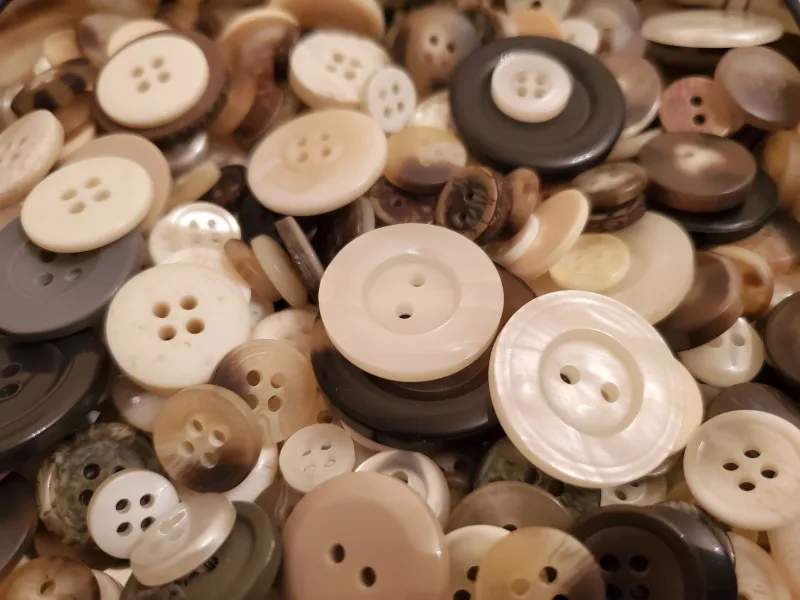
There is a particular sound in a good haberdashery: the dry rattle of a button tin. It is not a glamorous noise. It is the sound of small things being kept, sorted and remembered. In a world of next-day delivery and uniform plastic fastenings, that rattle has become oddly precious — a pearl-in-the-drawer kind of pleasure.
Britain still has its button keepers. They are behind counters in Yorkshire market towns, in narrow London shops that smell of wool and dust, in Edinburgh side streets and in the kind of seaside arcade where the window display has not changed since the millennium. Some are family businesses. Some are one-person operations run by people who simply could not bear to see the stock go to landfill. All of them are, in their own way, curators.
The drawer that remembers
Walk into one of these shops and you are not browsing a range. You are entering a collection. Wooden drawers are labelled in biro: Horn. Pearl-effect. Brass. Navy 18L. Oddments. The oddments drawer is the one that matters. It holds buttons from old school blazers, discontinued military coats, 1960s raincoats and factories that closed decades ago. There are cardigans’ worth of buttons with no cardigan attached. There are buckles, hooks, eyes, rickrack, piping, hem tape and lace so old it has gone the colour of weak tea.
For stylists, this is not nostalgia. It is problem-solving. A shoot needs a fastening that looks like it was made before 1975; the high street has nothing. A costume designer needs twenty identical buttons for a period coat; the button box has eighteen, and a story about where the other two went. A young jeweller wants a tiny mother-of-pearl disc to set into a brooch; the haberdashery has a whole jar, priced at pennies. These shops function as alternative design archives — unindexed, unglamorous and absolutely alive.
Why makers are shopping backwards
The current appetite for repair and rewear has given haberdasheries a new generation of customers. In 2026, mending is no longer a fringe activity. Repair cafés advertise on library noticeboards. Sewing classes fill up faster than some restaurant reservations. The Great British Sewing Bee has done its bit, but so has the cost of living, and so has a quiet revulsion at how quickly clothes become waste.
Young makers arrive with tote bags and screenshots. They are looking for buttons that feel specific, not generic. They want a horn button with visible grain, a faded cotton trim, a zip pull with a bit of weight. The haberdashery counter is one of the few places where they can touch the thing before buying it. That tactile exchange matters. You cannot scroll a drawer.
Stylists use these shops differently. They come for texture and surprise. A handful of mismatched buttons can become the detail that makes a look feel deliberate rather than sourced. A length of vintage velvet ribbon can transform a plain jacket. The haberdashery is a place where a shoot’s moodboard can be interrupted by something better than the plan.
The repair economy’s quiet engine
There is a practical side to all this, too. Haberdasheries keep the repair economy running. They sell the spare button, the matching thread, the hook and eye that saves a skirt from the charity bag. They are the opposite of a disposable supply chain: small, local, run on memory and patience.
That is why the closure of a haberdashery feels disproportionate. On paper, it is one shop. In practice, it is a skills network, a social service and a design resource. When the button box closes for good, the loss is not just stock. It is the knowledge of which drawer held the last of something. It is the owner who could tell you that the buttons came from a factory in Birmingham that shut in 1987. It is the possibility of a lucky find.
What closes when the box closes
We tend to mourn high-street closures in broad strokes: another empty window, another charity shop, another block of flats. Haberdasheries deserve a more specific grief. They are among the last shops where the unit of exchange is not a product line but a fragment. A single button. A metre of trim. A card of hooks. They ask you to think in components rather than outfits, which is a quietly radical way to shop.
The keepers themselves are often unsentimental about it. They will tell you that margins are thin, that younger customers love the idea but do not always buy, that the rent is the enemy. But watch them sort a new delivery of deadstock. Watch them match a customer’s swatch to a trim they have been saving for years. The care is obvious. It is not romantic. It is custodial.
A different kind of heirloom
Abalon’s interest is in rare finds and pearl-like curiosities, and the haberdashery is full of them. Not diamonds. Not designer labels. A card of 1930s glass buttons. A scrap of hand-embroidered ribbon. A tin of assorted fastenings that someone’s grandmother kept for a rainy day. These are heirlooms without paperwork, small objects that carry a household’s history in their weight and wear.
The next time you pass a shop with a window full of thread and a handwritten sign for odd buttons, go in. Open a drawer. Ask what the strangest thing in the back is. Buy one button you do not yet have a use for. The button keepers of Britain are not asking for much. They are asking us to notice that the smallest things are often the ones worth keeping.