Lobbying for a Seat: Why Britain’s Hotel Lobbies Are Becoming Public Living Rooms
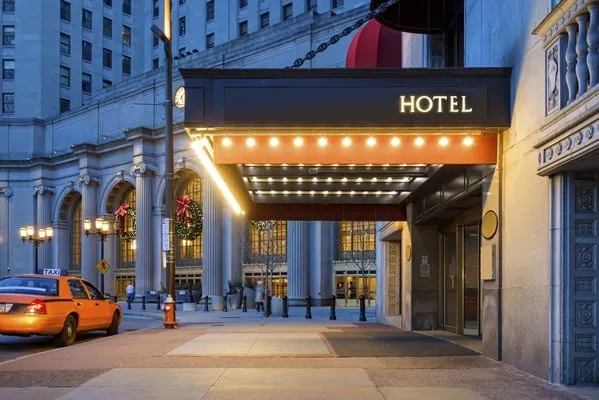
Photo: hotel lobby coworking London locals vermouth bar interior, via www.intechnic.com
There is a particular kind of silence in a hotel lobby at 2pm. It is the silence of polished stone, low lighting and the distant clink of a coffee cup. For decades, that silence was a warning: you were not supposed to be here unless you had a key card and a reason. The lobby was a corridor with a reception desk. Now, increasingly, it is the main event.
The new town square (with a wristband)
Walk into a handful of British hotels this autumn and you will find something unexpected: locals. Not tourists, not business travellers, but people who live within a mile and have decided that the hotel lobby is the best place to answer emails, meet a friend or read a book. The tables are occupied by laptops and flat whites. The bar serves vermouth and small plates. The sofas are deep enough to disappear into. Nobody asks if you are staying.
This is the democratised lobby, and it is being sold as a gift to the neighbourhood. Hotels have realised that a ground floor filled with non-residents is good for business: it sells coffee, wine, snacks and a sense of atmosphere. But it also raises a question. If the lobby is now a public living room, who exactly is it public for?
Three lobbies that get it right
The Hoxton — with outposts in London, Manchester and Edinburgh — is the obvious pioneer. Its lobbies are designed for lingering: long tables, power sockets, a bar that opens early and closes late. The brand calls it a ‘living room’, and it largely delivers. In Shoreditch, I watched a woman conduct a job interview at one table while a man typed furiously at another. Nobody looked out of place.
The Standard in London takes a more theatrical approach. Its lobby is a stage set of mid-century curves and loud wallpaper, and the bar is deliberately visible from the street. You go for the people-watching, and the people-watching is excellent. It is less a workspace than an aperitivo hour that starts at noon.
And then there is the quieter model: the newly refurbished lobby of a provincial hotel in Bath or Harrogate, where the sofas are arranged around a fireplace and the menu is short and local. These are the unsung heroes. They do not shout about their public welcome, but they mean it.
The economics of lingering
A hotel lobby is expensive real estate. Every square metre could be a bedroom or a conference suite. So why give it over to freelancers and day drinkers? The answer is simple: a lobby that feels alive is worth more than a lobby that feels empty. Hotels have learned from co-working spaces and members’ clubs. They know that atmosphere is a product. If you can sell a £4 coffee to twenty people who stay for three hours, and a £12 glass of wine to half of them, the maths works.
There is also the soft power of goodwill. A local who spends every Tuesday working in your lobby might book a birthday dinner there, recommend it to a friend, or return for a weekend stay. The lobby is a loss leader for loyalty.
Etiquette for the keyless
But the open lobby has rules, and they are not always clear. Can you take a phone call? Yes, if you keep your voice down. Can you bring your own food? Generally no. Can you sit for an hour without ordering anything? Not really — the unspoken contract is that you buy something. The best lobbies are relaxed about this; the worst make you feel like an intruder.
The worst also have a way of revealing their true nature. A lobby that says ‘everyone welcome’ but has no accessible seating, no free water and a barista who sighs when you ask for tap water is not democratic. It is a stage set for a particular kind of customer: the one who looks like they belong.
Civic generosity or velvet rope?
This is the uncomfortable question. The democratised lobby is a lovely idea, but it is still a business. The hotels that do it well are genuinely generous — they create spaces that feel like they belong to the city, not just to the people who sleep there. But there is a softer form of gatekeeping at work too: the dress code you cannot see, the prices that quietly exclude, the layout that makes some people feel at home and others feel watched.
Perhaps that is inevitable. A hotel lobby is not a public park. It is a private room with an open door. The best we can ask is that the door stays open, the coffee is good, and nobody asks to see your key card. On a rainy Tuesday in November, that feels like enough.