Needle Drop: The Social Clubs Making Repair the New Going Out
Photo: Jules Verne Times Two, CC BY-SA 4.0, via Wikimedia Commons
On a damp Tuesday in Bristol, the back room of a café smells of coffee, wool and faintly of wet raincoat. Six people are bent over a table, needles moving in and out of a much-loved jumper. The hole at the elbow is not being hidden. It is being framed in acid-yellow thread, a deliberate scar turned into a design feature. Nobody is talking about fast fashion. They are talking about biscuits, a difficult week at work and whether the person opposite has enough light for their sashiko stitches.
This is a mending circle, and it is having a moment. Across the UK, from church halls in Leeds to corner cafés in Glasgow and library meeting rooms in south London, people are gathering to repair clothes in public. The stitch is often visible, the mood is usually chatty, and the entry requirement is rarely more than a garment with a problem and a willingness to sit still for an hour or two.
The repair is the point
Visible mending is not a new idea so much as an old one with a new attitude. British darning kept socks and jumpers alive through decades of thrift, and Japanese sashiko has long used bold running stitches to reinforce worn cloth. What feels different in 2026 is the refusal to apologise for the repair. A patch is not a confession of poverty. It is a signature.
That shift has been helped along by the resale habit, the growing appetite for clothes with a story, and a general fatigue with the idea that a garment should look new until the day it is discarded. Repair cafés and sewing groups have been part of the landscape for years, but the mending circle is a softer, more social cousin. It is less about fixing a toaster and more about fixing a favourite pair of jeans while someone else fixes theirs beside you.
Bring a hole, leave with a plan
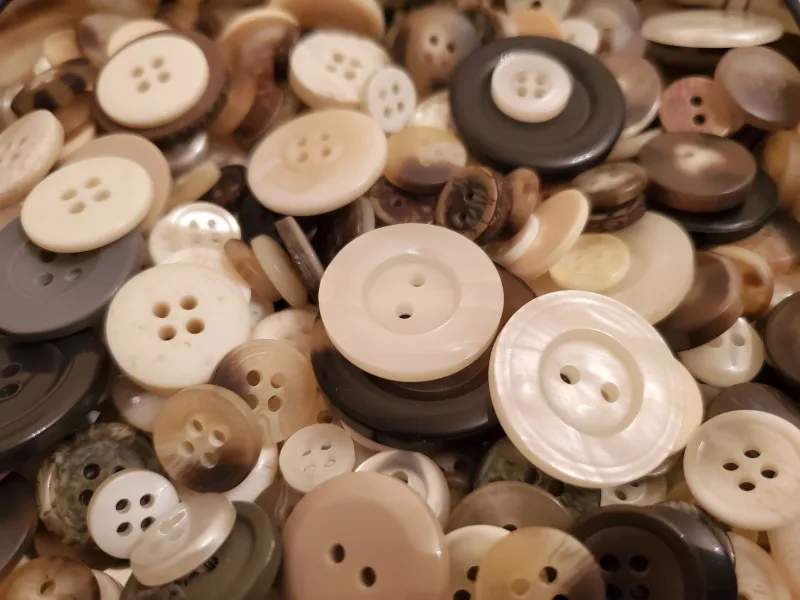
The format is pleasingly low-key. A table, a few lamps, an iron, a tin of pins. Someone brings a sewing machine they are happy to share. Someone else brings a bag of fabric scraps. There is usually tea, often cake, and occasionally a small jar where people drop a pound towards the room hire. The room is rarely silent. You can hear the soft rip of thread through denim, the clatter of a tin of buttons, the low hum of advice being exchanged.
Newcomers often arrive apologising for their lack of skill. They are quickly told that the first rule of mending club is that nobody is marking it. A wobbly line of running stitch is still a line of running stitch. A patch that puckers is still a patch that holds. The point is not to produce something that could pass for factory-made. The point is to keep the thing you already own in circulation, and to enjoy the process enough to do it again.
That pleasure is part of the draw for younger makers. Many come for sustainability reasons and stay for the company. In a culture where hobbies are often solitary and expensive, a mending circle offers something rare: a weekly appointment with your hands, a table of strangers who become familiar, and a visible result you can wear home. It is not a night out in the conventional sense. There is no queue, no minimum spend, no need to shout over music. But it scratches a similar itch.
The new Make Do and Mend
Britain has a long relationship with make do and mend, but the current version is less about wartime austerity than about agency. A darned sock is a small assertion that you are not finished with something yet. A patched knee is a way of saying that wear is not failure. The movement also sits comfortably alongside the resale economy, where clothes are increasingly valued for their history rather than their newness.
There is an aesthetic edge, too. Visible mending has found a natural home on Instagram and in the pages of style magazines, where a bright repair on a grey wool coat can look as considered as a piece of jewellery. But the groups themselves are usually less precious than the photographs suggest. The best ones feel like pubs with needles: gently chaotic, occasionally hilarious, and full of people who are happy to unpick their own work if it means someone else learns the stitch.
For anyone curious, the first step is simply to look locally. Libraries, independent haberdasheries, community centres and Repair Café networks often host sessions, and many advertise through newsletters and window cards rather than big campaigns. You do not need a full kit. A needle, a spool of strong thread, a pair of small scissors and something worn will get you through the door. The rest can be borrowed, improvised or learned.
A pearl in the oyster
What makes these gatherings quietly compelling is that they invert the usual logic of clothing. Instead of asking how a garment can be made to look untouched, they ask how it can be made more itself. A tear becomes an opportunity for colour. A thin elbow becomes a place to practise a pattern. The repair is visible because the life of the wearer is visible too.
It is a pearl-like idea, in the Abalon sense: an irritation turned into something lustrous. The hole is the grit. The circle is the oyster. And the result is not a perfect garment but a more interesting one, stitched in company and worn with a little more care.
As the Bristol evening ends, the jumper with the yellow elbow is folded and put away. Someone asks where the next session is. Someone else writes it on the back of a receipt. The room empties slowly, leaving behind a few threads on the floor and the sense that mending is less about the past than about what we decide to keep.