Theatre at Eye Level: The Quiet Comeback of the Hand-Dressed Shop Window
Photo: Internet Archive Book Images, No restrictions, via Wikimedia Commons
The window is small and the shop is small, and the whole thing has been arranged with the seriousness of a museum vitrine: one jacket on a wooden hanger, a stack of two books, a folded cloth, a single beam of light. It took the owner ninety minutes. More people will look at it this week than will read most magazine features.
Britain's high streets are supposedly in retreat, and in many places they are. But walk the right streets — the top end of a market town, the older parade in a suburb, the stubborn independent quarter of a northern city — and you notice something that does not fit the narrative. Windows are being dressed again. Not by head office, not by a planogram, but by hand, by people who have bought a roll of paper and a can of spray mount and decided that their glass is worth the effort.
Before the mannequin had a barcode
The professional window dresser was a real trade for most of the twentieth century. As department stores grew, so did the display department: prop-makers, painters, letterers, mannequin handlers, and a head of display who answered directly to the owner. Windows were unveiled on a schedule and crowds came to see them, particularly at Christmas, when the big London stores turned their façades into serialised stories and queues formed along the pavement.
It was a craft with its own vocabulary and its own institutions — the British Display Society, founded in the 1940s, ran examinations and courses for decades — and its own folk wisdom. Colour first. Height second. Never let the eye leave the glass. A window has perhaps three seconds to do its work, and almost all of that work happens before anyone reads a price.
What killed the job was not a lack of interest but consolidation. Chain retailers centralised. Props arrived in crates with instructions. Visual merchandising became a head-office function, then a photograph sent to store managers, then a laminated sheet. Meanwhile the department stores that had sustained whole display teams closed one by one, taking the training, the workshops and the prop stores with them.
Who is dressing the windows now
The revival is not nostalgic and it is not uniform. It comes in three or four recognisable shapes.
The first is the shopkeeper who does it themselves. A jeweller in a market town, say, with three windows and a good eye, who changes the display every few weeks because the same arrangement bores her as much as it bores the customer.
The second is the freelancer — often with a design or theatre background, sometimes a former store display artist who went solo when their department was cut. They are hired for a season, a launch or a Christmas, and they arrive with a van, a hot-glue gun and a plan.
The third is the collaborative version: a handful of independents on one street pooling money for a single dresser, so that the whole parade changes at once. You see this in places like Bold Street in Liverpool or the independent stretches of Bristol and Sheffield, where the effect is cumulative. One good window is a shop. Twelve good windows is a destination.
The economics of a small stage
A properly dressed independent window might cost £150 in materials and a day of somebody's time. A freelance dresser might charge a few hundred pounds for a seasonal scheme. Against that, consider what a window does that a paid advert cannot: it works on people who are already physically present, it changes with the light, and it is free to look at.
There is a practical craft to it, too, which the good dressers all describe in roughly the same terms. Sight lines matter more than props. Three objects is usually one too many. Height variation stops the eye dead. And the most common mistake in a small shop is trying to show everything — a window that displays the entire stock tells a passer-by only that there is a lot of it.
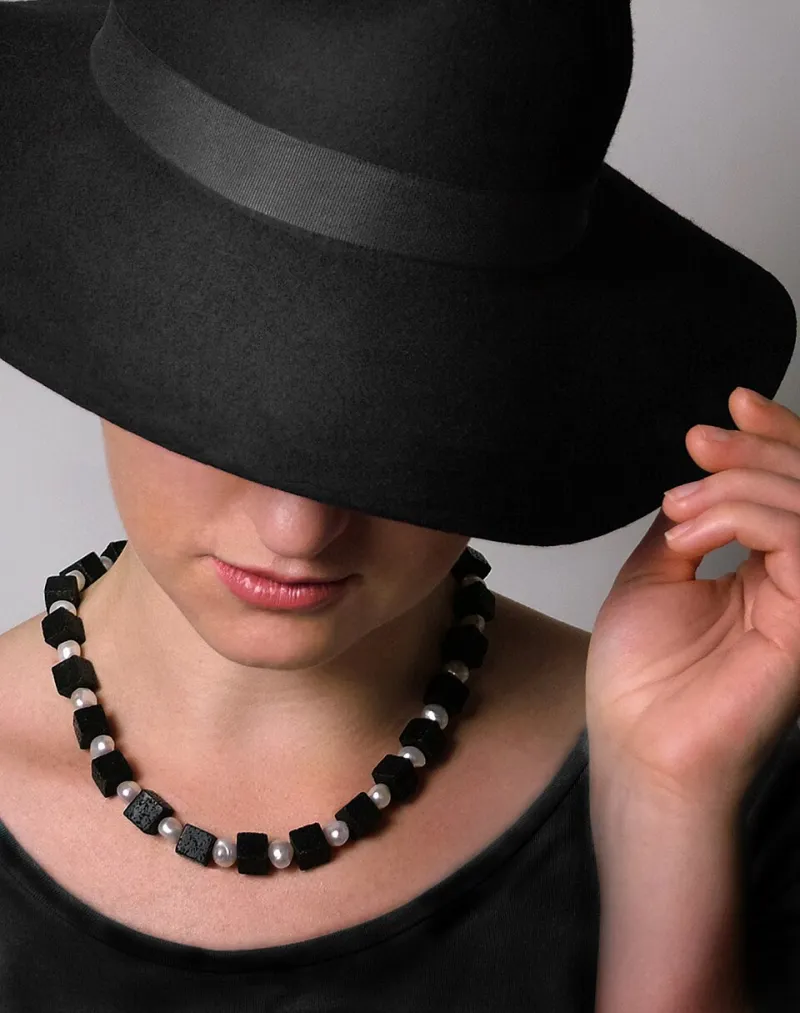
Jewellers have a particular advantage here, and always have. A small window, a dark ground, one piece under a narrow beam: it is the oldest trick in retail and it still stops people. Pearl, gold, a single line of type. Nothing else. The glass does the rest.
What a window says about the street
There is a civic dimension that nobody planned. A dressed window is evidence of attention, and attention is contagious. Streets where shopkeepers make an effort tend to keep their footfall; streets where the glass is covered in faded posters and a dead fly do not, whatever the business rates.
Which is why some councils and business improvement districts now quietly fund window schemes, and why the best of them insist on one condition: the shopkeeper has to be involved. A street dressed entirely by an agency looks like a set. A street dressed by the people who own the shops looks like a place.
Three seconds, and then the door
The strangest thing about a really good shop window is how little credit it gets. Nobody photographs it, nobody reviews it, and it will be dismantled in a fortnight. It exists for people in motion, at an angle, in the rain, on the way to somewhere else.
And yet the whole trade rests on a simple, slightly old-fashioned proposition: that someone walking past might look, and stop, and push the door. Everything else — the stock, the service, the till — depends on those three seconds. Hand-dressed, hand-lit, one object at a time, the British shop window is still making its small argument. It deserves a look.