Pearl Logic: The Volunteers Decoding Britain's Hidden Shell Grottoes
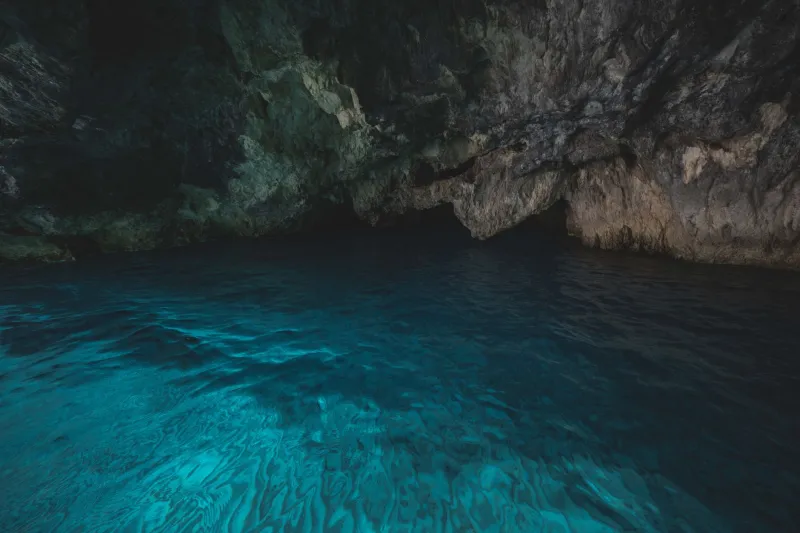
At Painshill in Surrey, the Crystal Grotto is reached by a path that curves through trees and then drops, suddenly, into a room of light and shell. On a damp morning in November, two volunteers are on their knees at the edge of the pool, one holding a torch, the other a clipboard. They are counting limpets. Not the living kind: the shells set into the plaster in the 1760s, when the grotto was built as a surprise at the end of a landscape walk. The count is part of a quiet, unglamorous project that is happening at shell rooms across Britain. Amateur archivists – retired teachers, jewellers, marine biology graduates, people who just like looking – are photographing, tagging and logging every shell they can reach. The aim is not to solve these strange interiors but to make them legible.
The clipboard at Painshill
The Painshill volunteers work with a shared spreadsheet. Columns record species, placement, condition and date. It sounds dry. It is not. A grotto is a three-dimensional archive, and the spreadsheet is its index. The shells here are mostly native: oyster, mussel, whelk, limpet. But there are surprises: a few cowries, a scatter of mother-of-pearl. The volunteers want a baseline, so that future conservators can tell what has changed. Previous repairs, including cement work from the 1980s, are now failing. Without records, every intervention is guesswork. With them, it is care. New volunteers are trained in shell identification and gentle cleaning; no one is allowed near the plaster without a torch and a second pair of eyes.
A fragile galaxy in Devon
At A la Ronde near Exmouth, the shell gallery is a different kind of puzzle. The 16-sided house was built in the 1790s by cousins Jane and Mary Parminter, and its gallery is lined with thousands of shells, some from the Pacific and Indian Oceans. The patterns look like stars, diamonds and initials. Visitors cannot walk through the gallery; they look up from below. Volunteers use mirrors on poles, endoscopes and high-resolution photography to study the shells without touching them. They are identifying species and tracing trade routes. Some shells are local. Others travelled thousands of miles. The gallery is a record of curiosity, and inevitably of empire. Humidity is the enemy here; the volunteers log it as carefully as they log the shells themselves.
Pope's paper trail
At Pope's Grotto in Twickenham, the archive work happens at a desk. Alexander Pope's tunnel, lined with shells, mirrors and minerals, survives in fragments. Here volunteers cross-reference letters, bills and inventories with the shells that remain. Pope wrote about the grotto; he also complained about the cost. The volunteers are mapping which shells came from which supplier, and what that says about 18th-century taste. It is detective work with a dash of gossip. The shells are evidence, but so are the invoices.
The meaning question
Why did people build these rooms? The answers are never single. Some grottoes were status symbols, some were private jokes, some were attempts to bring the coast inland. Shells were cheap and exotic at the same time; they could signal trade, science or simply delight. In 2026, the meaning question has shifted. We are less interested in decoding a secret message than in understanding the labour and the looking. A grotto is a pearl: a small irritation that became something iridescent. The volunteers are the grit.
Makers in conversation
Contemporary artists are responding. A ceramicist in Stoke-on-Trent has been developing glazes that mimic nacre. A jeweller in Birmingham's Jewellery Quarter is setting mother-of-pearl offcuts into signet rings. A sound artist has recorded the drip of water in a grotto and turned it into a 12-minute piece. None of this is nostalgic. It is a conversation with the original makers, who were also improvisers, working with whatever shells came off the boats. A small touring exhibition of these responses is planned for 2026, moving between a library, a church hall and a former swimming pool – spaces with the same slightly odd, in-between feel as the grottoes themselves.
The open call
Several grottoes are looking for volunteers. You do not need a degree in malacology. You need patience, a decent torch and a willingness to learn. The archives are being digitised; the spreadsheets are shared; the photographs are online. The point is not to solve the mystery but to keep it legible. In a culture of flat, fast images, these rooms demand slow looking. That is their real rarity.