Sardine Confidential: The Rise of Britain’s Tinned-Fish Counters
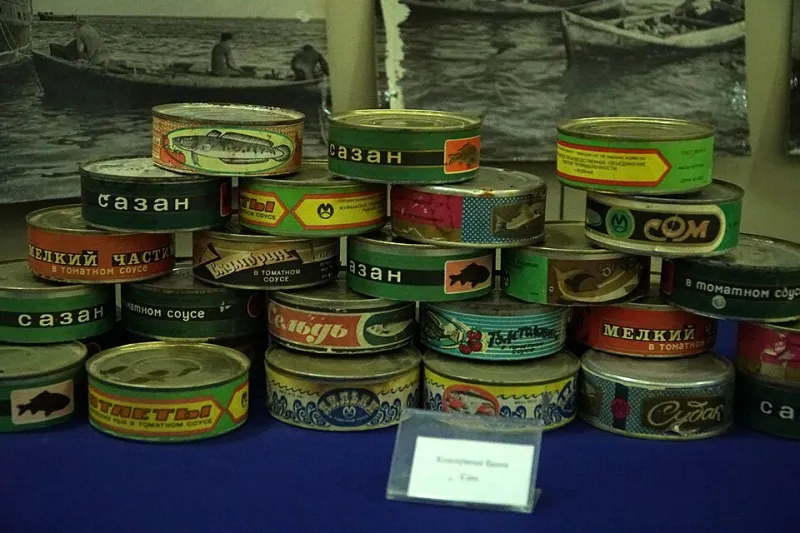
Photo: Adam Harangozó, CC BY-SA 4.0, via Wikimedia Commons
In a narrow side street in Margate, a chalkboard announces the day’s haul: ‘Sardines, vermouth, no phones.’ Inside, a dozen people perch on stools around a zinc counter, prising open flat rectangular tins with the reverence of collectors. The air smells of olive oil, brine and citrus peel. This is not a restaurant in any conventional sense. It is a conservas counter — part bar, part pantry, part theatre of the small, strange plate — and it is the most quietly thrilling night out in Britain right now.
The tin as objet d’art
Walk into any of the new wave of tinned-fish bars and the first thing you notice is the packaging. These are not the squat, dusty cylinders of childhood. They are slender, matte-finished rectangles with typographic labels in Basque, Galician or Portuguese. Some have pull-tabs; others require a small key. The best are displayed like jewellery, stacked in glass cabinets or arranged on marble shelves. At a counter in Bristol, the owner hands me a tin of smoked oysters as if it were a brooch. ‘Look at the artwork,’ she says. ‘People buy two — one to eat, one to keep.’
The aesthetic matters because the tin is the menu. You choose by label, by region, by the story printed on the side. A sardine from the Cantabrian coast tastes different from one tinned in Brittany, and the difference is part of the pleasure. The smallness of the plate — a few fillets, a scatter of cornichons, a slick of aioli — forces you to pay attention. It is the opposite of the sharing platter. It is a solo exhibition.
A short history of the small plate
Britain has always had a complicated relationship with preserved fish. We are a nation of kipper suppers and anchovy toasts, but the tinned-fish bar is a newer import, arriving via Spain and Portugal and finding fertile ground in the UK’s post-pandemic appetite for low-intervention wine and high-intervention design. The first wave opened in London around 2021 — tiny rooms in Soho and Brixton with no reservations and a short list of vermouths. Then came Margate, where a former chip shop was reborn as a six-seat counter, and Bristol, where a natural-wine importer added a conservas menu to his warehouse shop.
What unites them is a refusal to treat tinned fish as a compromise. These places are not serving sardines because fresh fish is expensive. They are serving them because the tins are curious, collectible and delicious. The small plate is not a starter; it is the whole point.
The importers making waves
Behind every good conservas counter is a good importer. In London, a handful of small firms now specialise in Spanish and Portuguese tins, sourcing from family canneries that have been at it for generations. One importer tells me he spends half his year driving between Galician ports, tasting from the line. ‘The best tins are not the most expensive,’ he says. ‘They are the ones where the fish was caught that morning and packed by hand.’
These importers are also tastemakers. They supply the bars, advise on menus and sometimes open their own counters. The result is a small, interconnected world where the person who sells you a tin of mussels might also be the person who designed the label. It is a supply chain you can taste.
Why it feels Abalon
Abalon is a site about rare finds and pearl-like curiosities, and the conservas counter fits perfectly. It is a place of discovery: you go for one tin, you leave with three, plus a new favourite vermouth. The scale is human. The prices are not terrifying — a good tin costs less than a cocktail — but the experience feels considered. There is a ritual to opening a tin, spreading a little butter on bread, taking a sip of something cold and salty. It is luxury redefined as attention, not expense.
It also helps that the rooms are beautiful. The best counters are exercises in restrained maximalism: tiled walls, brass taps, a single shelf of tins, a vase of dried flowers. They look like the inside of a pearl. You want to linger.
The etiquette of the conserva counter
There are rules, mostly unspoken. Do not ask for chips. Do not photograph every tin before eating. Do order the vermouth — the house pour is usually excellent. And do talk to the person next to you, because the counter is a shared surface and the conversation is part of the menu. At one bar in Margate, I watched two strangers bond over a tin of razor clams and a shared dislike of anchovies. By the end of the evening they had exchanged numbers. That is the conservas counter at its best: a small, strange plate that opens up a large, generous world.
Where to go
The geography is still small but growing. London has the highest concentration — look for the tiny counters in Soho and Brixton, and the newer spots in Hackney and Peckham. Margate’s original six-seater remains the pilgrimage. Bristol has a warehouse-cum-bar that feels like a secret. And in Edinburgh, a wine shop with three stools has started serving tins on Fridays. Go early, sit at the counter, order something you cannot pronounce. The tin will do the rest.